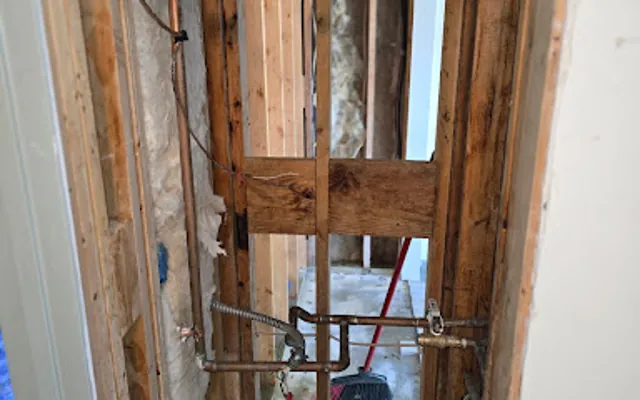
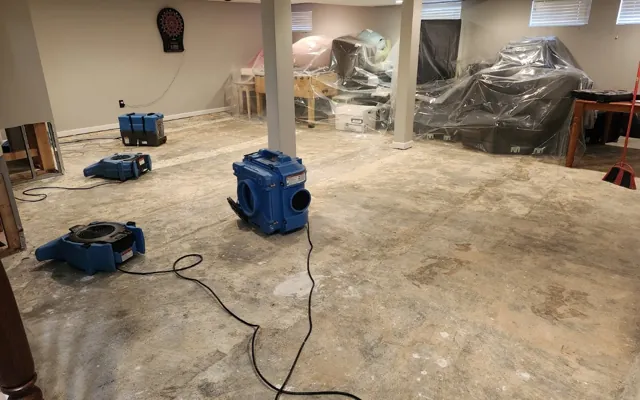
Winter runoff flows toward San Antonio Heights foundations and garages. When pipes burst in these hillside homes, long private supply runs hide the leak. Thermal imaging and IICRC drying make the difference.

Crews help you find the main valve for your San Antonio Heights property, shut it down, and then scan for water using thermal imaging before crews extract anything.
Thermal imaging and soil-moisture probes detect water in buried supply lines and under your San Antonio Heights home's foundation so nothing stays hidden.
Air movers and dehumidifiers work continuously in your San Antonio Heights home while crews monitor drying progress daily until the structure passes a final moisture test.

Frozen pipe damage cleanup in San Antonio Heights typically runs $2,000 to $8,000, depending on how long the thawed pipe flowed, how many rooms took on water, and whether ceilings, cabinets, and flooring need rebuilding. Pipe repair is billed separately. Sudden pipe bursts, including freeze-related ones, are usually covered by homeowner's insurance, and crews document the cause and coordinate directly with your adjuster.
San Antonio Heights sits directly north in the San Gabriel foothills, a quiet community of older owner-occupied homes on larger lots with long private supply runs buried in the landscape. A leak along that piping can run undetected far longer than in a standard lot, and hillside terrain sends winter water downhill into garages and foundations. San Antonio Heights' elevated position and larger lot sizes mean private supply runs are longer and harder to trace when they fail. Added to that, winter atmospheric-river runoff flows downhill toward foundations, and many homes carry original plumbing. The combination makes detection and drying especially important. From San Antonio Heights, crews also cover nearby Ontario, Montclair, Etiwanda, Upland, Claremont, Alta Loma. See every neighborhood and town on the full service area page.
See all areas servedEvery loss is photographed, measured, and logged from the first visit, so the paperwork holds up with your insurance carrier.
Technicians follow recognized IICRC drying standards and prove the work with daily moisture readings, not guesswork.
Emergency dispatch any hour of the day or night, with a real crew on the way, not a callback in the morning.
A real crew dispatched any hour, not a callback in the morning.
Trained technicians following recognized IICRC drying standards.
Truck-mounted, portable, and submersible for any size loss.
The loss is documented and billed to the carrier directly.
The higher elevation and foothill location mean winter cold lasts longer and can be more intense. Long outdoor supply runs are more exposed. Yes, these properties face extra freeze risk.
Thermal imaging shows the cold zone created by water loss around the break. Soil-moisture probes confirm it. Crews combine both methods to pinpoint the location.
Crews are on call 24 hours a day and can be on the way to San Antonio Heights within the hour.
Call (909) 442-0503