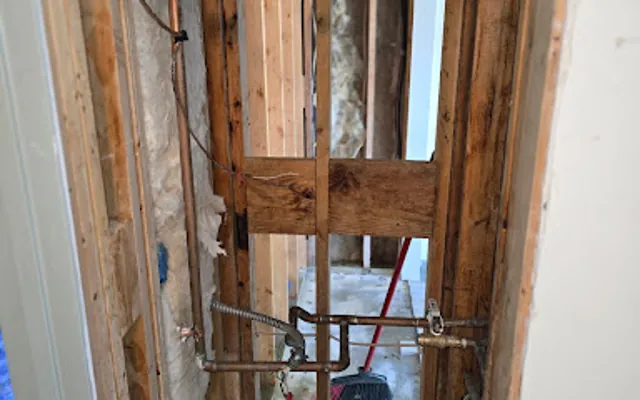
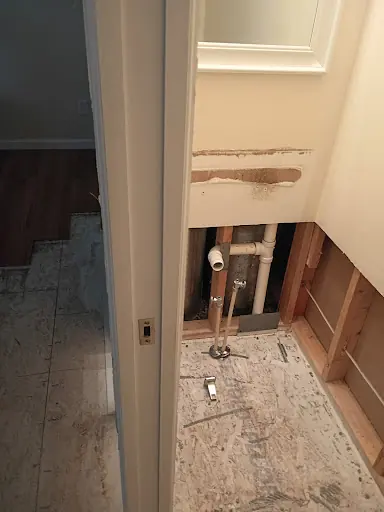
A rare cold snap can freeze and split an exposed pipe, then flood the house when it thaws. Dryforce answers 24/7 in Rancho Cucamonga, arriving in about an hour to extract water and dry the structure with IICRC-standard crews.

Crews help stop the water at the main, then extract standing water quickly to keep it from migrating further through the home as the pipe thaws.
Thermal imaging and moisture meters locate the split and reveal water hidden inside walls, ceilings, and under flooring so nothing damp is missed.
Crews open saturated cavities as needed and run air movers and dehumidifiers, tracking daily readings until framing and finishes meet a dry standard.
Damaged drywall, insulation, and flooring are rebuilt, and crews advise on insulating the vulnerable line so it is protected in the next cold snap.

While help is on the way, these first steps, done only where it is safe, limit the damage and protect the insurance claim.
Shut the supply off at the source, or close the home's main valve if the source is not obvious. Stopping the flow limits the damage more than anything else.
Switch off electricity to the affected area, but only if the breaker can be reached without standing in or touching the water.
Get a crew dispatched right away. The sooner extraction and drying begin, the more flooring, drywall, and belongings can be saved.
Take photos and a short video of the water and the affected rooms before anything is moved, so the insurance claim starts strong.
Frozen pipe damage cleanup in Rancho Cucamonga typically runs $2,000 to $8,000, depending on how long the thawed pipe flowed, how many rooms took on water, and whether ceilings, cabinets, and flooring need rebuilding. Pipe repair is billed separately. Sudden pipe bursts, including freeze-related ones, are usually covered by homeowner's insurance, and crews document the cause and coordinate directly with your adjuster.
Crews reach Rancho Cucamonga and the Inland Empire fast, from Alta Loma and Cucamonga to Etiwanda, plus nearby Upland, Ontario, Fontana, and Montclair. See the full list on the areas served across Rancho Cucamonga page.
See all areas servedEvery loss is photographed, measured, and logged from the first visit, so the paperwork holds up with your insurance carrier.
Technicians follow recognized IICRC drying standards and prove the work with daily moisture readings, not guesswork.
Emergency dispatch any hour of the day or night, with a real crew on the way, not a callback in the morning.
A real crew dispatched any hour, not a callback in the morning.
Trained technicians following recognized IICRC drying standards.
Truck-mounted, portable, and submersible for any size loss.
The loss is documented and billed to the carrier directly.
Not often, but yes. The area gets a handful of below-freezing nights each winter, more in the higher foothill neighborhoods. Because homes here are seldom built for cold, exposed pipes in garages, attics, and exterior walls can freeze and split during a cold snap, then flood when they thaw.
Ice expands and cracks the pipe while frozen, but the crack is plugged by ice, so little escapes at first. When the pipe thaws and pressure returns, water pours from the split. That is why many freeze bursts are discovered as flooding during the warm-up rather than during the cold night itself.
During a forecast cold snap, insulate exposed lines in the garage and attic, disconnect and cover hose bibbs, let a faucet drip on the coldest nights, and keep the garage door closed. These simple steps matter most in the foothills, where overnight temperatures drop further than the valley floor.
Sudden pipe bursts, including those caused by freezing, are typically covered by homeowner's insurance for water extraction, drying, and repairs. Some policies expect reasonable care, such as maintaining heat, during known cold events. Crews document the cause and moisture readings so your adjuster can process the claim.
Rancho Cucamonga crews are on call 24 hours a day, local and fast, and can be on the way within the hour.
Call (909) 442-0503