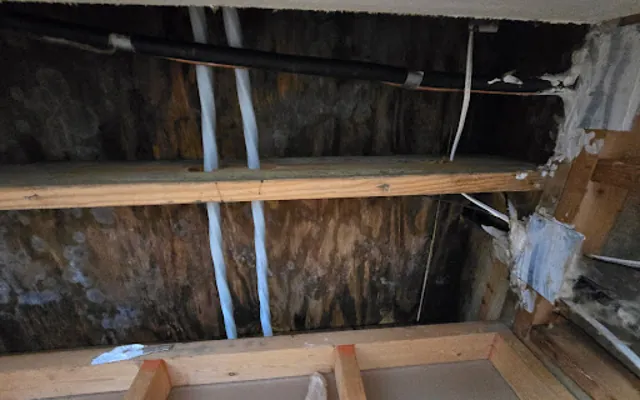
Stains spreading across your ceiling from above? Attic leaks hide for weeks in Rancho Cucamonga homes. The IICRC-standard crew arrives in about an hour, finds the source, and dries the framing before mold takes hold.

Crews inspect the roof deck, flashing, ducts and condensate lines with moisture meters and thermal imaging so the leak is stopped, not just the symptom below it.
Saturated insulation is bagged and removed, standing water on the ceiling plane is extracted, and crews protect the rooms below from further drips.
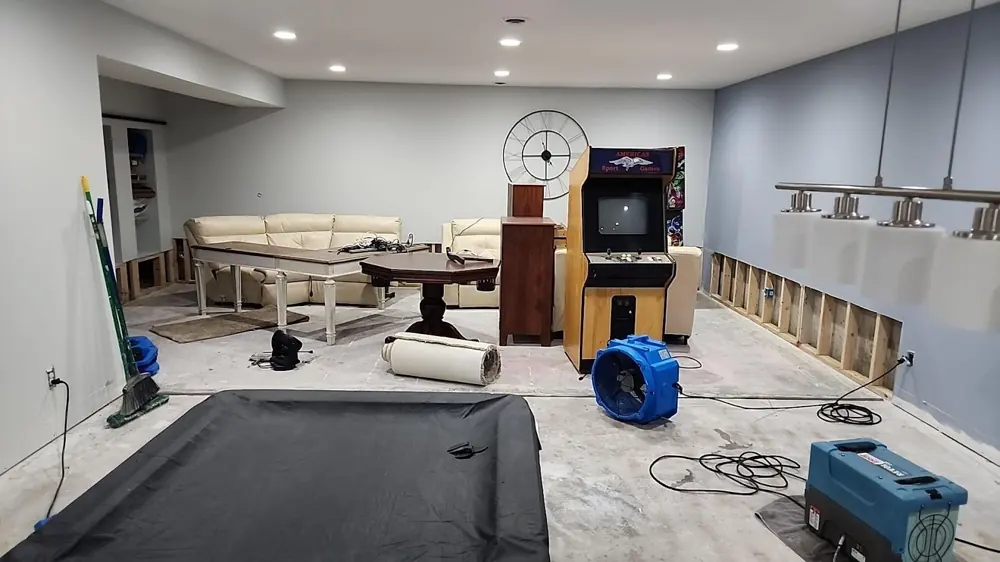
Air movers and dehumidifiers pull moisture from rafters, sheathing and top-plate framing while crews log daily readings until the attic reaches a dry standard.
Crews treat surfaces, replace damaged drywall and sheathing, install fresh insulation to code, and repair paint so the ceiling looks right again.

While help is on the way, these first steps, done only where it is safe, limit the damage and protect the insurance claim.
Shut the supply off at the source, or close the home's main valve if the source is not obvious. Stopping the flow limits the damage more than anything else.
Switch off electricity to the affected area, but only if the breaker can be reached without standing in or touching the water.
Get a crew dispatched right away. The sooner extraction and drying begin, the more flooring, drywall, and belongings can be saved.
Take photos and a short video of the water and the affected rooms before anything is moved, so the insurance claim starts strong.
Attic water damage in Rancho Cucamonga usually runs $1,500 to $6,500. The main drivers are how long the leak ran, how much insulation and sheathing are ruined, and whether ceiling drywall below needs replacement. Roof repair is billed separately. Sudden events like a storm-driven leak or a burst condensate line are typically covered by homeowner's insurance, and crews document everything and coordinate directly with your adjuster.
Crews reach Rancho Cucamonga and the Inland Empire fast, from Alta Loma and Cucamonga to Etiwanda, plus nearby Upland, Ontario, Fontana, and Montclair. See the full list on the areas served across Rancho Cucamonga page.
See all areas servedEvery loss is photographed, measured, and logged from the first visit, so the paperwork holds up with your insurance carrier.
Technicians follow recognized IICRC drying standards and prove the work with daily moisture readings, not guesswork.
Emergency dispatch any hour of the day or night, with a real crew on the way, not a callback in the morning.
A real crew dispatched any hour, not a callback in the morning.
Trained technicians following recognized IICRC drying standards.
Truck-mounted, portable, and submersible for any size loss.
The loss is documented and billed to the carrier directly.
Common signs are brown rings on upper ceilings, a musty smell in top-floor rooms, sagging or bubbling drywall, and visibly damp or matted insulation. In many Rancho Cucamonga homes the leak is well above the stain, so a moisture-meter inspection of the attic is the only way to map the real extent.
Blown-in cellulose and fiberglass that has been soaked usually cannot be salvaged. It compresses, loses insulating value, and holds moisture that feeds mold. Crews remove the saturated material, dry the framing beneath it, and install fresh insulation to restore your attic's performance.
If the cause was sudden, such as a storm-driven roof leak or a failed condensate line, most homeowner's policies cover the cleanup and interior repairs. Long-term leaks from deferred maintenance may be denied. Crews document the source and moisture readings so your claim is well supported.
Mold can begin on damp sheathing and framing within 24 to 48 hours, and warm attic temperatures speed it up. That is why crews respond quickly, remove wet material, and run continuous drying rather than waiting to see whether the attic dries on its own.
Rancho Cucamonga crews are on call 24 hours a day, local and fast, and can be on the way within the hour.
Call (909) 442-0503