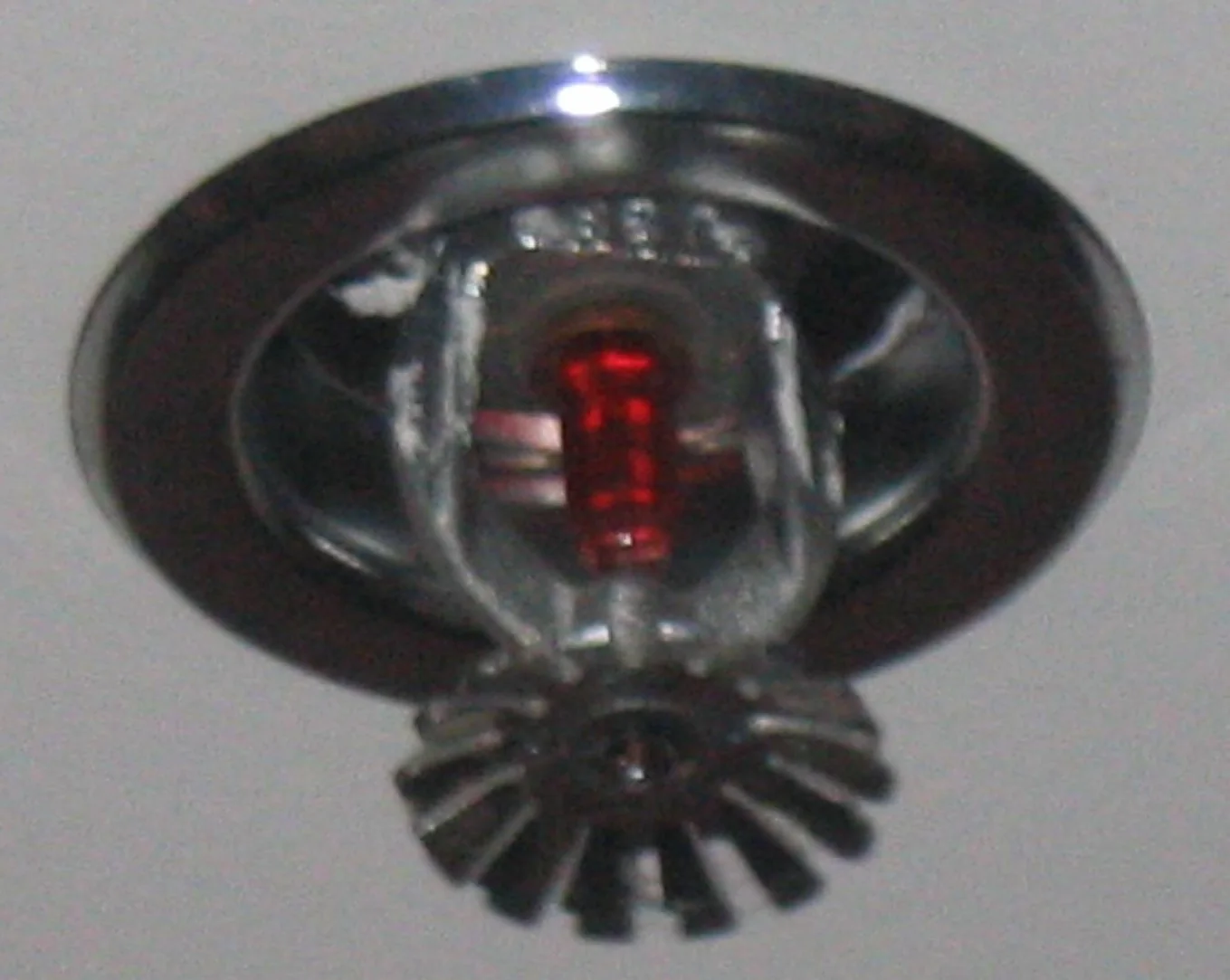
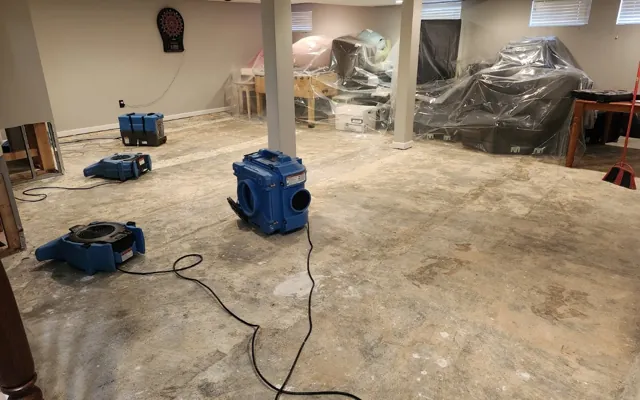
Fire sprinkler discharge in newer Eastvale tract homes spreads through two stories fast. The crews arrive within the hour with pumps, extractors, and dehumidifiers to stop water from soaking finished ceilings and flooring. IICRC-standard response and documentation from call to verified dry.

Crews verify the sprinkler riser is shut, then position extractors to remove standing water from upper and lower levels. Eastvale's two-story layouts mean water can travel through ceiling cavities, so crews extract all affected areas simultaneously to stop secondary damage.
The crew uses moisture meters and thermal imaging to trace water paths through drywall, ceiling cavities, subflooring, and the slab rim. Eastvale two-story homes require floor-by-floor mapping to ensure no water is missed in insulation or framing.
Crews position dehumidifiers and air movers on both floors and take daily readings to track drying progress. Crews verify that upper-level cavities and lower-level rim joists both reach IICRC standards before crews stop the equipment.

Fire sprinkler discharge cleanup in Eastvale ranges widely, roughly $2,000 to $12,000 or more, because a single head can flood multiple floors quickly. Cost is driven by how long the system ran, how many levels and rooms were affected, and the value of soaked contents or inventory. Accidental discharge is typically covered by homeowner's or commercial property insurance, and crews document everything for your adjuster.
Eastvale is a newer city built mostly in the 2000s with large tract homes on slab foundations. The plumbing is younger and more reliable than older neighborhoods, but washing-machine hoses, dishwasher supply lines, and water heaters still fail without warning. When discharge happens, water travels down through ceiling cavities and into multiple rooms faster than in older, single-story homes. Eastvale's newer construction means most plumbing fails from wear or accident rather than corrosion, but the failures are sudden and catastrophic. Washing-machine discharge hoses, dishwasher supply lines, and water-heater ruptures are the most common triggers. Two-story construction lets water cascade through ceiling cavities into multiple levels, and the slab-on-grade foundation means water spreads horizontally as well as vertically. From Eastvale, crews also cover nearby La Verne, Pomona, Jurupa Valley, Fontana, Mira Loma, Glen Avon. See every neighborhood and town on the full service area page.
See all areas servedEvery loss is photographed, measured, and logged from the first visit, so the paperwork holds up with your insurance carrier.
Technicians follow recognized IICRC drying standards and prove the work with daily moisture readings, not guesswork.
Emergency dispatch any hour of the day or night, with a real crew on the way, not a callback in the morning.
A real crew dispatched any hour, not a callback in the morning.
Trained technicians following recognized IICRC drying standards.
Truck-mounted, portable, and submersible for any size loss.
The loss is documented and billed to the carrier directly.
Eastvale two-story homes let water cascade through ceiling cavities and into insulation, drywall, and the floor below in seconds. The slab-on-grade foundation below also wicks the water horizontally, multiplying the damage area. This is why fast extraction and thorough drying matter so much in Eastvale.
Yes. Standard rubber hoses in Eastvale homes often burst after 5 to 10 years from water pressure, UV damage, or kinks. Upgraded stainless-steel hoses last longer but still fail eventually. If your Eastvale washing machine is more than five years old, consider upgrading the hoses.
Crews are on call 24 hours a day and can be on the way to Eastvale within the hour.
Call (909) 442-0503