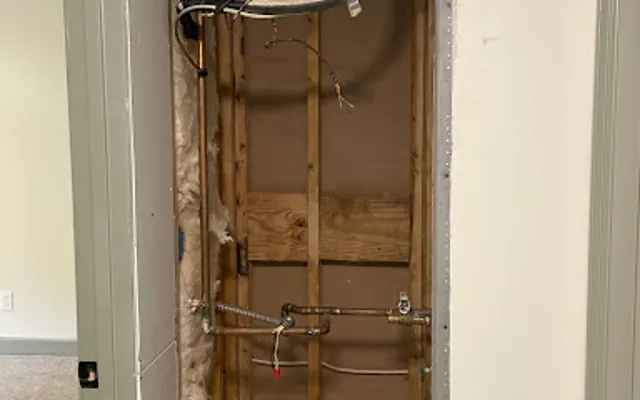
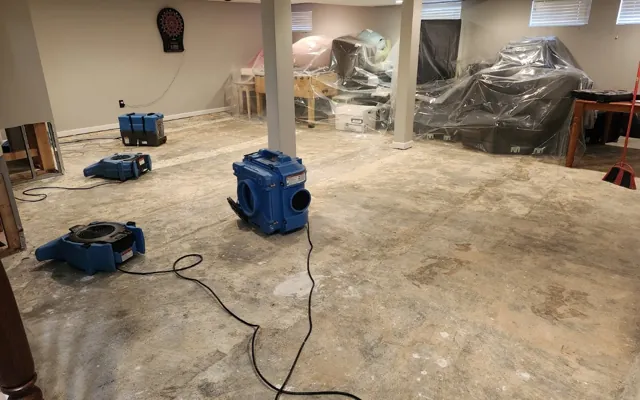
Winter storms and foothill runoff push water toward Alta Loma garages and slabs daily. The IICRC-standard crew responds to burst-pipe damage in hours, extracting standing water and mapping moisture in walls and cavities before mold or rot sets in.

Crews help you shut off the main supply, then position pumps and extractors to remove standing water fast, stopping it from migrating deeper into the slab and surrounding soil.
Thermal imaging and moisture-detection meters reveal water hidden inside walls, ceiling cavities, and under flooring so crews don't seal up any damp zone that could grow mold.
Crews run air movers and dehumidifiers daily, measuring moisture in the structural materials until they reach dry standards, then coordinate the pipe repair and rebuild damaged drywall, insulation, and flooring.

Burst pipe cleanup in Alta Loma commonly runs $2,500 to $9,000, driven by how long the pipe ran open, how many rooms took on water, and whether cabinets, flooring, and ceilings need rebuilding. Pipe repair is billed separately by a plumber. Sudden pipe bursts are among the most reliably covered water losses under homeowner's policies, and crews document the event and coordinate directly with your adjuster.
Alta Loma's position against the San Gabriel foothills means winter storms and runoff naturally head toward garages, slabs, and foundation areas. Most homes in the district are older ranch or newer hillside tracts, many still running original plumbing that fails as aging takes its toll. A burst supply line or slab leak here can spread quickly across the foundation. Alta Loma's terrain slopes toward homes, so winter storms and foothill runoff naturally concentrate water at garages and foundations. Aging supply lines and water heaters fail regularly, and slab-on-grade construction lets moisture wick unseen under flooring. Evaporative coolers and roof leaks add seasonal pressure. From Alta Loma, crews also cover nearby Cucamonga, Upland, Etiwanda, Ontario, San Antonio Heights, Montclair. See every neighborhood and town on the full service area page.
See all areas servedEvery loss is photographed, measured, and logged from the first visit, so the paperwork holds up with your insurance carrier.
Technicians follow recognized IICRC drying standards and prove the work with daily moisture readings, not guesswork.
Emergency dispatch any hour of the day or night, with a real crew on the way, not a callback in the morning.
A real crew dispatched any hour, not a callback in the morning.
Trained technicians following recognized IICRC drying standards.
Truck-mounted, portable, and submersible for any size loss.
The loss is documented and billed to the carrier directly.
Crews use thermal imaging cameras and moisture-detection meters that read through drywall and other materials without cutting them open. These tools reveal cold or damp zones inside walls and ceilings, showing the crew exactly where water traveled. Crews then target drying efforts and, if needed, carefully open cavities to confirm and accelerate drying in those zones.
Saturated soil and prolonged moisture around the foundation can stress the slab and rim. Quick extraction and thorough drying minimize that risk. Crews also coordinate with your plumber to locate and repair the source fast. If water was present for weeks or months before you noticed it, a structural inspection after drying is wise.
Crews are on call 24 hours a day and can be on the way to Alta Loma within the hour.
Call (909) 442-0503