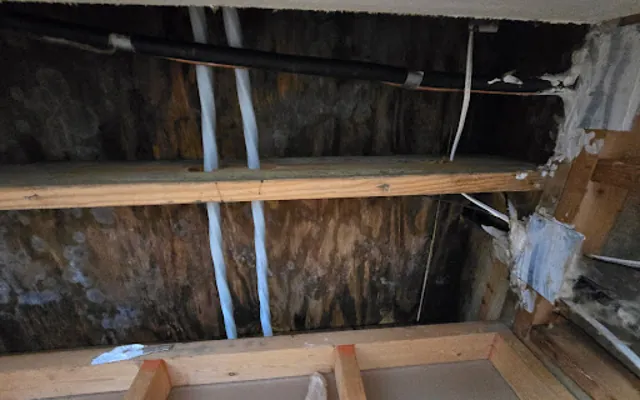
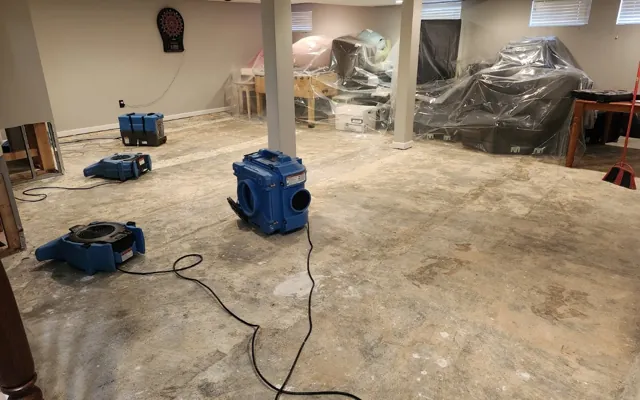
When the crew arrives at a San Dimas water damage job, the first move is to locate and stop the water source, then extract standing water from the attic before it spreads. IICRC-standard and local, crews then dry the structure to verified standard.

Crews use moisture meters and thermal imaging to trace water's path from the source through rafters, sheathing, and insulation, locating exactly where the leak entered and how far it has spread in san-dimas.
Standing water is removed from the attic, saturated insulation is bagged and disposed of safely, and crews protect the rooms below from further drips while preparing for drying.
Air movers and dehumidifiers run 24/7, pulling moisture from the attic structure and framing. Daily readings confirm progress until the san-dimas attic reaches verified dry standard.

Attic water damage in San Dimas usually runs $1,500 to $6,500. The main drivers are how long the leak ran, how much insulation and sheathing are ruined, and whether ceiling drywall below needs replacement. Roof repair is billed separately. Sudden events like a storm-driven leak or a burst condensate line are typically covered by homeowner's insurance, and crews document everything and coordinate directly with your adjuster.
San Dimas is a foothills community northwest of Rancho Cucamonga, with older neighborhoods and newer hillside tracts. Winter storms and runoff push water into aging roofs and failing systems. When damage is discovered, speed is essential to prevent spread. San Dimas' foothills location means winter storms drive heavy rain downhill. Aging roof flashing, gutters, and supply lines fail under seasonal pressure. Newer hillside homes have condensate lines that overflow. From San Dimas, crews also cover nearby Norco, Bloomington, Rialto, Pedley, Rubidoux, Chino Hills. See every neighborhood and town on the full service area page.
See all areas servedEvery loss is photographed, measured, and logged from the first visit, so the paperwork holds up with your insurance carrier.
Technicians follow recognized IICRC drying standards and prove the work with daily moisture readings, not guesswork.
Emergency dispatch any hour of the day or night, with a real crew on the way, not a callback in the morning.
A real crew dispatched any hour, not a callback in the morning.
Trained technicians following recognized IICRC drying standards.
Truck-mounted, portable, and submersible for any size loss.
The loss is documented and billed to the carrier directly.
Crews locate the water source with thermal imaging and moisture meters, then stop active water entry. Crews extract standing water before it spreads into living spaces. Source control and extraction are the first priorities.
Call immediately. The first few hours are critical. Water spreads quickly through attic cavities and down walls. Early response minimizes damage and keeps restoration costs down.
Crews are on call 24 hours a day and can be on the way to San Dimas within the hour.
Call (909) 442-0503