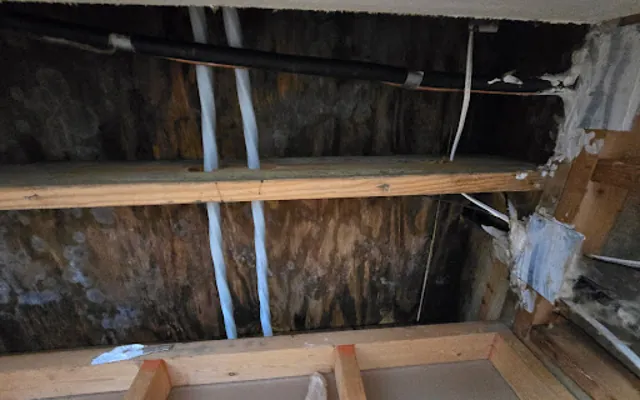
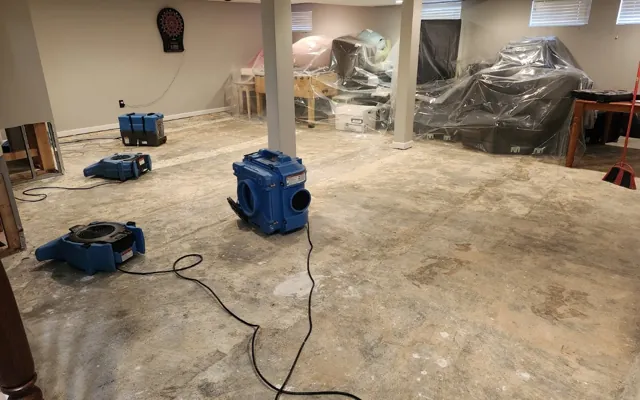
Mid-century ranch homes fill Montclair, and their original galvanized plumbing and drains corrode from the inside long before failure shows outside. When they break, the IICRC-standard local crews respond quickly to extract water, remove damaged insulation, and dry the attic.

Crews use moisture meters and thermal imaging to trace water's path from the source through rafters, sheathing, and insulation, locating exactly where the leak entered and how far it has spread in montclair.
Standing water is removed from the attic, saturated insulation is bagged and disposed of safely, and crews protect the rooms below from further drips while preparing for drying.
Air movers and dehumidifiers run 24/7, pulling moisture from the attic structure and framing. Daily readings confirm progress until the montclair attic reaches verified dry standard.

Attic water damage in Montclair usually runs $1,500 to $6,500. The main drivers are how long the leak ran, how much insulation and sheathing are ruined, and whether ceiling drywall below needs replacement. Roof repair is billed separately. Sudden events like a storm-driven leak or a burst condensate line are typically covered by homeowner's insurance, and crews document everything and coordinate directly with your adjuster.
Montclair is a compact, mature city west of Rancho Cucamonga, filled mostly with mid-century single-family homes on modest lots. Much of that housing still carries its original galvanized plumbing and drains, which corrode from the inside long before anything shows on the surface. A supply-line break or a sewer backup here tends to move fast once it starts. Montclair's mid-century housing stock is the primary risk factor. Galvanized pipes installed in the 1950s are now corroding internally, and many have not yet failed. When they do break, water flows fast into the attic and living spaces. Supply-line ruptures and sewer backups are the most common calls in Montclair. From Montclair, crews also cover nearby San Antonio Heights, Claremont, Ontario, Etiwanda, Chino, Upland. See every neighborhood and town on the full service area page.
See all areas servedEvery loss is photographed, measured, and logged from the first visit, so the paperwork holds up with your insurance carrier.
Technicians follow recognized IICRC drying standards and prove the work with daily moisture readings, not guesswork.
Emergency dispatch any hour of the day or night, with a real crew on the way, not a callback in the morning.
A real crew dispatched any hour, not a callback in the morning.
Trained technicians following recognized IICRC drying standards.
Truck-mounted, portable, and submersible for any size loss.
The loss is documented and billed to the carrier directly.
If your home was built in the 1950s-1970s with original galvanized plumbing, risk is high. Galvanized pipes typically last 40-60 years before internal corrosion causes rupture. A plumber can inspect for corrosion and recommend replacement.
Sudden supply-line rupture is typically covered by homeowner's insurance. Crews document the failure, extract water, dry the structure, and coordinate with your adjuster. Slow leaks from gradual corrosion may have limited or no coverage.
Crews are on call 24 hours a day and can be on the way to Montclair within the hour.
Call (909) 442-0503